New Sintering processes improve the process for manufacturing soft magnetic composite compacts

Abbott Furnace Sintering Furnaces

To make a multi-step manufacturing process as efficient as possible, it’s critical to look at the time impact of each component task. One example involving composite materials for automotive applications involves parts made by compacting soft magnetic composite material. Traditional sintering furnaces are often used to remove lubricant from the formed compacts. However, this can result in quality discrepancies in the parts, damage the furnace, and slow the entire manufacturing process down.

Here, we’ll examine the problem and a new approach to lubricant removal made possible by redesigning the standard sintering furnace.

THE CHALLENGE OF DELUBING

As Coble et al. note, “although the industry has worked to reduce the amount of lubricant that is mixed into the powder, there is always a need for some. The problem arises when the compact is to be sintered. The lubricant must be removed from the compact or a carbon residue [i.e. soot] will form and detrimentally impact the properties of the final product.” A common lubricant used by many manufacturers is ethylene bis stearamide (EBS).

Conventional sintering furnaces cannot maintain the necessary temperature range for lubricant removal without also causing it to decompose and create soot. This is because often, the radiant heat in these furnaces heats the parts too quickly to temperatures that are too high, which contributes to sooting. If lower temperatures are used, however, it may take multiple passes through the furnace to remove the lubricant.

Efficient Manufacturing of Soft Magnetic Composite Compacts

Research shows that lubricant removal is best accomplished at lower temperatures and for longer periods of time than those traditionally used in conventional sintering. It is also beneficial to add moisture in a controlled way to prevent soot formation. A conventional sintering furnace can be redesigned into a multi-function furnace capable of
the appropriate range of temperatures, treatments, and processing times for effective lubricant removal.

The Vulcan

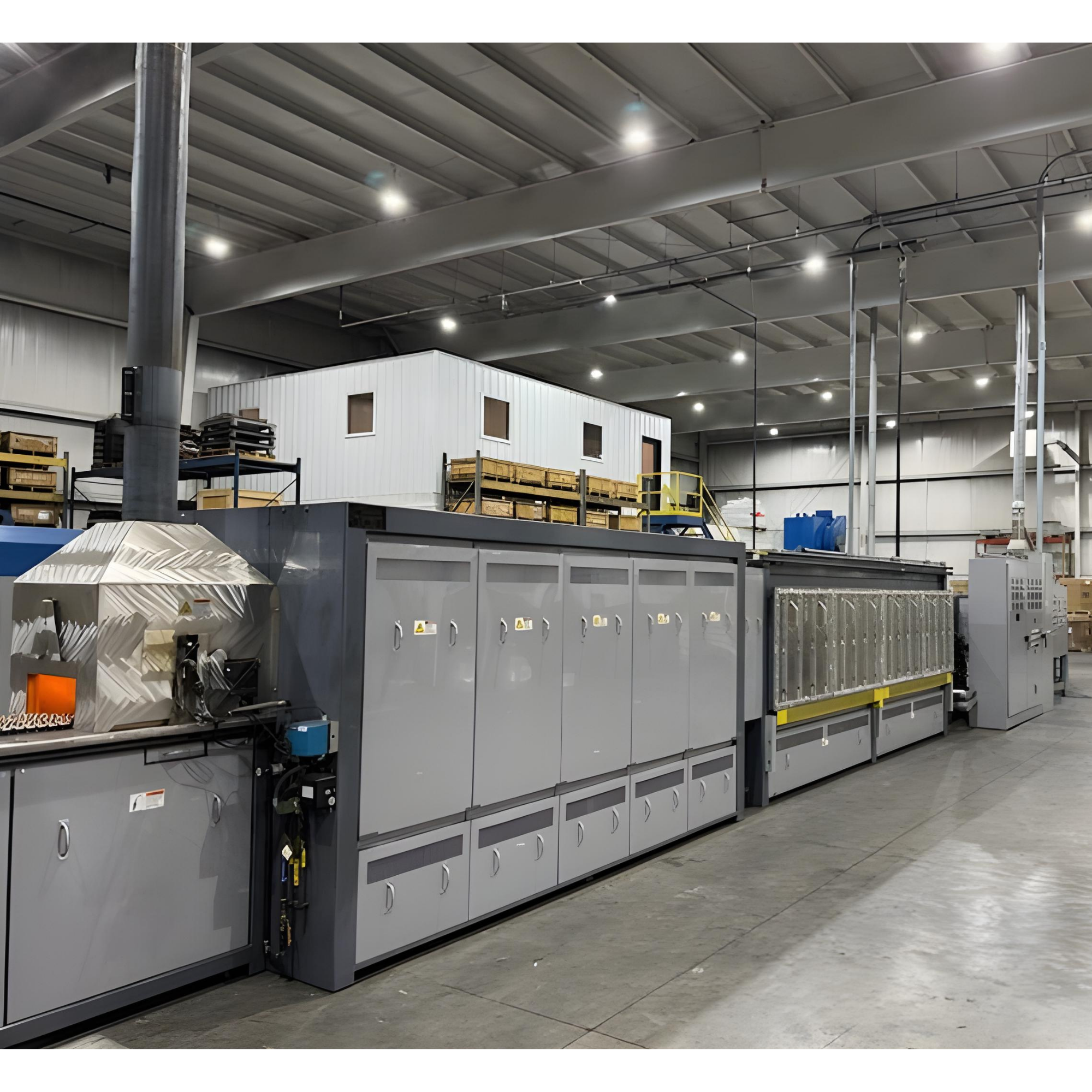
Abbott Furnace Vulcan Delube SystemAbbott Furnace Company’s Vulcan furnace is capable of the specific parameters needed for delubing compacts. It includes convective heat transfer, automated loading, and adjustable belt speed, all of which allow for greater control over temperature and atmospheric conditions during delubing.

“The Vulcan uses an independent moisture source that provides fine control of the amount of water introduced. The injection location and fine moisture control allow moisture to react with any carbon being dropped during the lubricant breakdown.Moisture injection in conventional systems is typically insufficient, difficult to control, or influences the system’s thermal control, all negatively influencing the quality of lubricant removal process,” as Coble and colleagues explain.

Research has shown that the complete removal of the lubricant can significantly impact the quality of the product. In some cases, the product’s physical properties may be improved by as much as 18% over those produced via conventional sintering.
The Nautilus

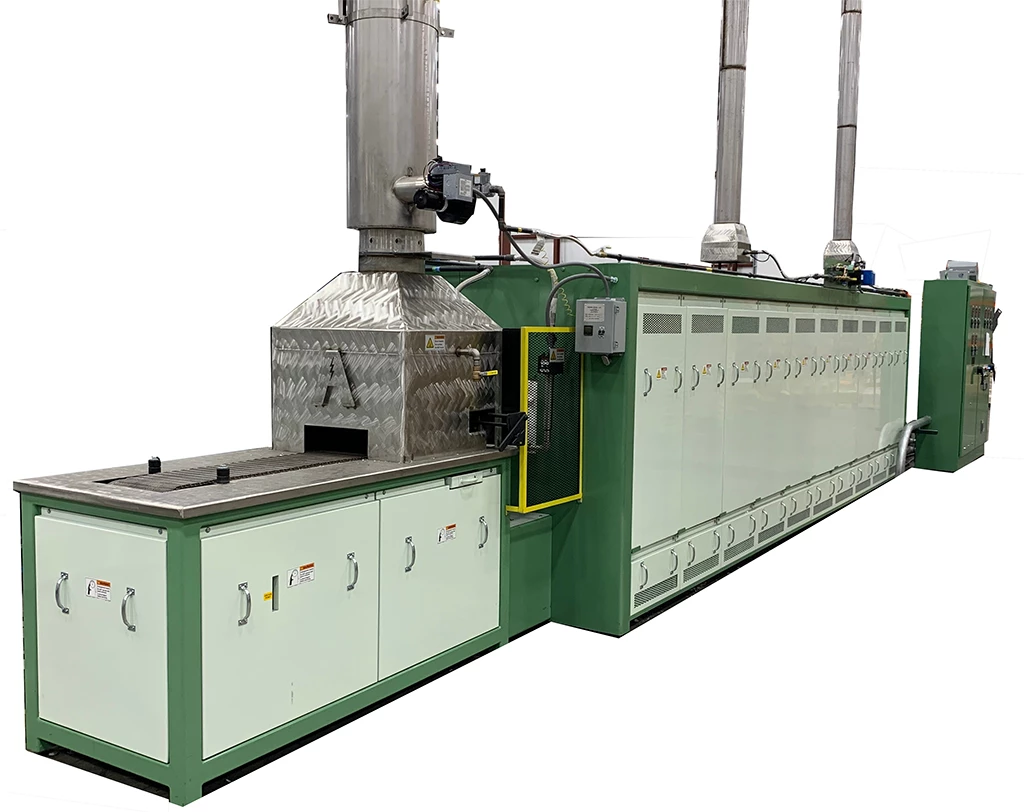
Another furnace innovation for the production of soft magnetic composites is the Nautilus. Stephen L. Feldbauer, Ph.D. describes the furnace and the process. “The goal of this technology is to use the vast research that has been conducted in lubricant removal to effectively remove all the lubricant from the compact in a single pass.  Without leaving the equipment, the product is then delivered directly to the secondary process step, be it steam, air cure, or 650°C processing in nitrogen. Hence, the multiple passes for lubricant removal, the cost of repetitive heating and cooling, and the extra handling of the product are eliminated.  The result is a process that is up to four times more efficient than processing soft magnetic composites with conventional powder metal processing equipment.”
ABBOTT’S NAUTILUS SOFT MAGNETIC COMPOSITE PROCESS

STEPS IN CONTINUOUS PROCESSING OF SOFT MAGNETIC COMPOSITE PARTS

Here’s a simple summary of the process:

  • Ferrosilicon particles are mixed with phosphorus and lubricant to form the composite material
  • Material is molded into the desired shape
  • Compact is ejected from the mold
  • Compact is loaded onto a conveyor to run through the Nautilus
    • Stage 1: Convection heat treatment chamber to remove lubricant
    • Stage 2: Internal track moves the compact further down the chamber for steam/air/nitrogen curing
  • Part is unloaded, cooled, and ready for assembly or the next manufacturing step

A more detailed discussion of this process and supporting research is found here.

If you work with soft magnetic composites, this improved sintering application for the delubing process can greatly impact your manufacturing process. As a leader among sintering furnace suppliers, Abbott Furnace Company has the know-how and equipment you need – please get in touch with us to learn more and discuss your next project!

Abbott Furnace Optimization Webinar

Furnace Optimization webinar replay (Presented in Spanish)

OPTIMIZE YOUR BRAZING FURNACE Lower Costs. Same Quality. Greater Competitiveness. The greatest opportunity for savings in your brazing operation may not be during production — it may be during idle time. Join Abbott Furnace Company for this free webinar focused on practical strategies to optimize the operation of continuous brazing furnaces during production downtime. Learn

Read More »
Abbott Furnace Company in the News

Stephen L. Feldbauer, Ph.D. Featured in Heat Treat Today

Abbott Furnace Featured in Heat Treat Today | April 2026 Abbott Furnace Company is honored to be featured in the April 2026 edition of Heat Treat Today in the article: “Hydrogen Part 1: Powerful Reducing Properties, High Thermal Conductivity” The feature includes expert insight from Stephen L. Feldbauer, Ph.D., Head of Research & Development at

Read More »
Abbott Furnace Continuous Furnace & Brazing Symposium

Abbott Furnace 2026 Continuous Furnace & Brazing Symposium Recap

Industry Professionals Gather for Two and a Half Days of Technical Education, Networking & Innovation Abbott’s 2026 Continuous Furnace & Brazing Symposium brought together industry professionals from across the thermal processing, powder metallurgy, brazing, heat treating, and advanced manufacturing industries for two and a half days of technical education, collaboration, and networking. Held in Louisville,

Read More »
continuous belt furnace

Abbott Furnace Company Delivers 7-Zone Sintering Furnace to Metco Industries

FOR IMMEDIATE RELEASEMarch 2026 Abbott Furnace Company Delivers 7-Zone Sintering Furnace to Metco Industries St. Marys, PA — Abbott Furnace Company has successfully delivered and commissioned a seven-zone continuous belt sintering furnace for Metco Industries. The system incorporates Abbott’s latest generation of fully digital atmosphere control technology, engineered and manufactured in-house. The system is designed

Read More »
Abbott Furnace Construction Comparison Webinar

Furnace Construction Comparison- Light Construction vs Abbott Furnace Construction webinar replay (Presented in Spanish)

Not all industrial furnaces are built the same, and those differences matter when uptime, reliability, and long-term operating cost are on the line. In this technical webinar, Abbott Furnace experts will break down the key design and construction differences between typical “light construction” furnaces and Abbott’s heavy-duty furnace construction, examining how these choices impact performance,

Read More »
Translate »
Scroll to Top